What Travel With AmaWaterways Actually Feels Like
The best travel memories aren't the landmarks themselves—they're the small, unrepeatable moments that happen in between.
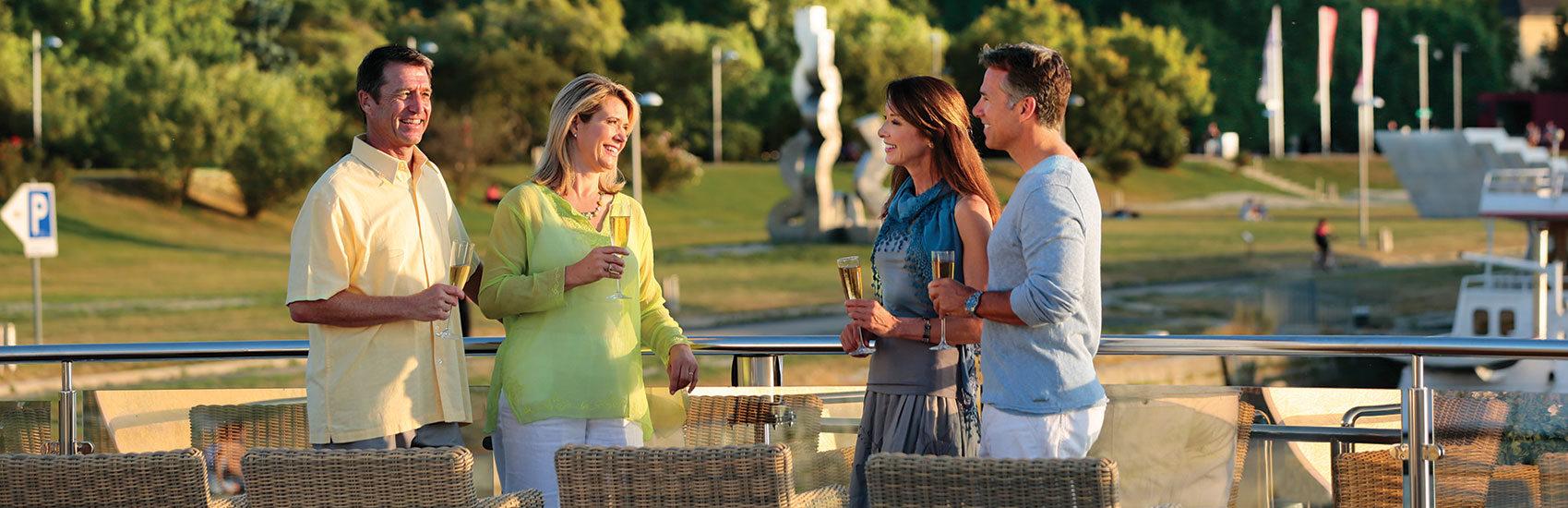
The moments travelers actually remember from a trip rarely make it into a brochure. On an AmaWaterways cruise, that moment might be the smell of a wood-fired oven drifting through a Provençal village square before you've even seen the bakery. It might be a Portuguese grandmother handing you a glass of Port before you've asked for one, insisting you try it with the local cheese she just cut. It might be nothing more than the restaurant host remembering, on day three, where you like to sit, or a crew member folding your dinner napkin into the same small shape every night without being asked. It's rarely the landmark itself. It's the minutes around it, the ones no photograph can quite capture, that guests tend to talk about years later.
What sets AmaWaterways apart is that its cruises aren't built around checking off sights. Instead, guests are given enough time, enough access and enough context to feel like they've experienced a place, rather than just visited it.
Food as the Fastest Way Into a Culture
Ask most guests what they remember first, and it's usually a meal. That's not an accident. AmaWaterways’ Executive Chef Robert Kellerhals treats cuisine as a way of telling a destination's story, building menus so each course adds to the one before it, turning dinner into a way of understanding a region rather than just eating in it. Ingredients come from farmers and purveyors along the rivers themselves, not from a central warehouse, so a meal in Bordeaux and a meal along the Douro genuinely taste like two different places rather than two versions of the same menu.
That philosophy extends on shore as well. In Libourne, outside Bordeaux, guests join a breadmaking workshop rather than simply watching one, hands in the dough, learning the same techniques a local baker uses every morning. In Paris, the "Cooking with Mamie" experience pairs guests with local grandmothers preparing traditional recipes, sharing stories and family history along with the food itself. In Belgium, an afternoon with a master chocolatier in Brussels' Sablon district turns into an actual lesson in tempering and shaping, not a demonstration behind glass. None of this requires guests to seek it out. It's built into the day, the same way a good host doesn't announce a meal is special before you've tasted it.
Culture, Told by the People Who Live It
What stands out most is who's doing the talking. Onshore experiences are led by locals and specialists, people who grew up in the towns and regions guests are visiting. A walk through Vieux Lyon's hidden traboules means more coming from someone whose grandmother once used those same passageways. A tasting in the Douro Valley carries more weight from a vintner whose family has worked those terraced hillsides for generations.
That local-first approach shows up in specific, concrete moments across nearly every itinerary: a banitsa workshop in a home kitchen in Vidin, a bike ride past Roman ruins along the Rhine and a visit to the wine museum in Bordeaux, a stop at a family-run quinta in Portugal's wine country for a lunch that's more conversation than course list. In Normandy, a local historian walks guests through the D-Day landing beaches with a level of personal detail that's hard to find anywhere else. Guests aren't just observing culture from a distance. They're inside it, even if only for an afternoon, and it tends to be the afternoons like these that stick with travelers long after they've returned home.
Everything You Need, Already Considered
None of this works if guests are spending their mental energy on logistics instead of the place in front of them. That's the quieter part of the experience, and arguably the harder one to get right: staterooms, meals, onshore experiences and a dedicated Cruise Manager are handled well before a guest ever steps off the plane. Ships carry an average of just 156 guests, small enough that crew members learn names, preferences and usual drink orders within the first day or two. Even the wine at dinner is chosen with the itinerary in mind, so what's in the glass tends to match what's outside the window.
It's the kind of care that lets a journey through several countries and multiple destinations feel, in practice, like a single continuous journey rather than a string of transitions.
Portugal: A River Carved by Centuries of Wine
That same attention to place is easiest to see up close, region by region, starting with Portugal's Douro Valley. Few rivers wear their history as visibly as the Douro. Its terraced hillsides, some of the steepest vineyard slopes in the world, were carved by hand over centuries specifically to make impossible ground productive, and the region remains one of the oldest demarcated wine regions on Earth. On Enticing Douro, a 7-night cruise roundtrip from Porto, days move between Port tastings in centuries-old cellars and a day trip to the golden sandstone city of Salamanca, before returning each evening to Porto's illuminated riverfront.
For travelers who want to slow down even further, Flavors of Portugal & Spain follows the Douro between Porto and Vega de Terrón at a gentler pace, with more time built into each stop: family-owned quintas where lunch turns into an afternoon, a walk through the medieval streets of Castelo Rodrigo, and long stretches of vineyard scenery from the ship's Sun Deck. It's the same river, told at a different speed, and both versions reward the traveler who came for wine and stayed for everything wrapped around it.
Three Regions, Three Perspectives on France
France may be the single country where AmaWaterways offers the widest range of ways to experience it, because the rivers themselves cut through such different versions of the country. Paris & Normandy follows the Seine from the city's grand boulevards to Normandy's chalk cliffs and harbor towns, the same coastline and light that drew Monet to paint, with stops at the D-Day landing beaches and the medieval streets of Rouen along the way.
Farther south, Colors of Provence moves between Lyon and Arles through the landscape that shaped Van Gogh's palette, past the Papal Palace in Avignon and vineyard-covered hills along the Rhône, with truffles, local wine and regional cheese threaded through nearly every stop. Taste of Bordeaux tells an entirely different story, blending wine with history and a touch of vibrant city life. This cruise moves from Saint-Émilion's storied vineyards to Médoc's historic estates, with a breadmaking workshop, a bike ride through Cadillac, and an exclusive wine festival in Bourg along the way.
For travelers who want the fullest possible picture, Grand Seine & Rhône links Paris to Arles over 14 nights, spanning two French rivers and effectively both halves of the country, from Normandy's coast in the north to the sun-drenched landscapes of the south. Taken together, these four itineraries prove there's no single way to see France by river, only the version that matches what a traveler came looking for.
The Point of All of It
None of this is really about ticking off a list of countries. It's about the specific, small, unrepeatable moments a good itinerary makes room for: a grandmother's recipe, a vintner's expertise, a baker's technique, a Cruise Manager's recommendation. Travel brochures are good at listing where a ship goes and what it includes. What's harder to put on a page is what it actually feels like to be there, and that's usually the part worth discovering for yourself, one river, one meal, one afternoon at a time.
Contact to start planning a river cruise through Portugal, France, or any of AmaWaterways' destinations around the world.

AmaWaterways invites travelers to embark on authentic and immersive journeys along the world’s most storied rivers. Their award-winning fleet of custom-designed ships cruises across Europe’s iconic waterways – including the Danube, Douro, Rhine, Moselle, Seine, and more – as well as Southeast Asia’s Mekong River, Africa’s Chobe River, Egypt’s Nile River and Colombia’s Magdalena River.
On board, guests are free to explore the world at their own pace, whether joining daily excursions, rejuvenating with wellness activities or simply sharing time with friends and family. AmaWaterways has earned recognition for their warm and attentive service, innovative and sustainable ship design, award-winning wellness amenities, and regionally inspired farm-to-ship cuisine. AmaWaterways ensures every guest enjoys a river cruise experience that feels uniquely their own.